
Investing in René Magritte: Auction Records and Market Strength
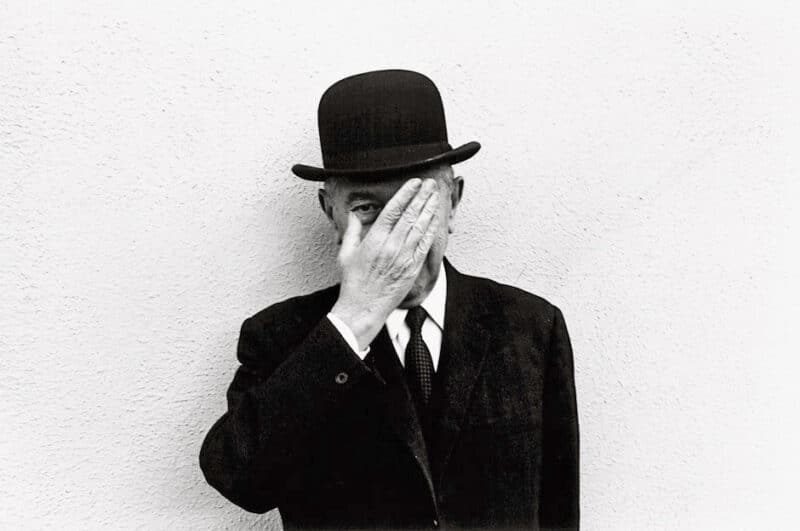
René Magritte: market value, auction records, and why the artist anchors Matis's investment thesis
René Magritte's market has never been stronger. In November 2024, a version of his celebrated L'Empire des Lumières sold for $121.16 million at Christie's New York, a new world record for the artist, and a striking leap from the previous record of $79 million set just two years earlier in 2022. That trajectory places Magritte among a small group of 20th-century artists whose market keeps accelerating rather than plateauing, decades after his death.
This combination, an instantly recognisable body of work paired with sustained, accelerating demand at auction, is exactly why Magritte sits at the centre of Matis's investment thesis in blue chip art.

Magritte's position in the modern art market
Magritte belongs to a tier of 20th-century artists whose auction market has both depth and international reach: works consistently draw competitive bidding across major auction houses in New York, London, and Paris, spanning collectors from private buyers to institutions. The November 2024 record for L'Empire des Lumières - $121.2 million at Christie's - is no isolated spike. This motif, in which day and night coexist, is among the artist's most emblematic, and one he reworked across numerous versions. One of them featured in the Centre Pompidou's major Surrealism retrospective, staged to mark the movement's centenary. These variations on iconic motifs (day and night, the apple, the bird, the bowler-hatted man…) are what drive René Magritte's market today. Several versions of L'Empire des Lumières rank among his top results, three of them sold within the past two years. The 2024 price therefore reflects not a market peak, but a recurring and deep-seated demand for the artist's iconic motifs. For an investment thesis grounded in blue-chip art, it is this combination - market depth, enduring appeal and institutional recognition - that matters, as much as the record figures themselves.
Magritte and the birth of Surrealism
Magritte emerged from the Surrealist movement launched by André Breton's 1924 manifesto, alongside artists like Dalí, Ernst, and Miró. But where many of his peers distorted form to conjure dream logic, Magritte took the opposite path: painting with deliberate, almost deadpan realism, then using that precision to unsettle the viewer's sense of what is real. That distinction is a large part of why his work reads as instantly identifiable, and why it has aged into one of Surrealism's most quoted visual languages, still referenced across advertising, film, and design today.
Who was René Magritte
Born in Lessines, Belgium, in 1898, Magritte trained at the Académie Royale des Beaux-Arts in Brussels before developing this singular approach. The Treachery of Images, with its inscription "Ceci n'est pas une pipe," remains one of the most cited works in the history of conceptual art. He continued refining this approach until his death in Brussels in 1967.
Magritte doesn't paint to tell a story. He paints to unsettle a certainty. A simple image is never quite what it shows: familiar objects placed in impossible situations, reminders that a representation is never reality itself.

A career validated by the market and major institutions
Magritte's work entered the art market, and institutional collections, and has remained there. Magritte worked notably with Alexander Iolas, one of the twentieth century's foremost dealers, who played a defining role in bringing European Surrealism to American collectors. Decades later, a major retrospective travelled across four leading institutions: London's Hayward Gallery, New York's Metropolitan Museum of Art, Houston's Menil Collection, and the Art Institute of Chicago, between 1992 and 1993. Sustained institutional attention across decades, rather than a single moment of fashion, is one of the traits Matis looks for when selecting artists.
Investing in a Magritte artwork
Owning an original Magritte has traditionally been reserved for major collectors and institutions, given the scale of investment required. Through Matis's co-investment model, it's now possible to gain exposure to works by iconic 20th-century artists like Magritte, alongside a community of investors, while benefiting from Matis's expertise in sourcing and investment structuring. Discover more about Matis's approach on our website.

