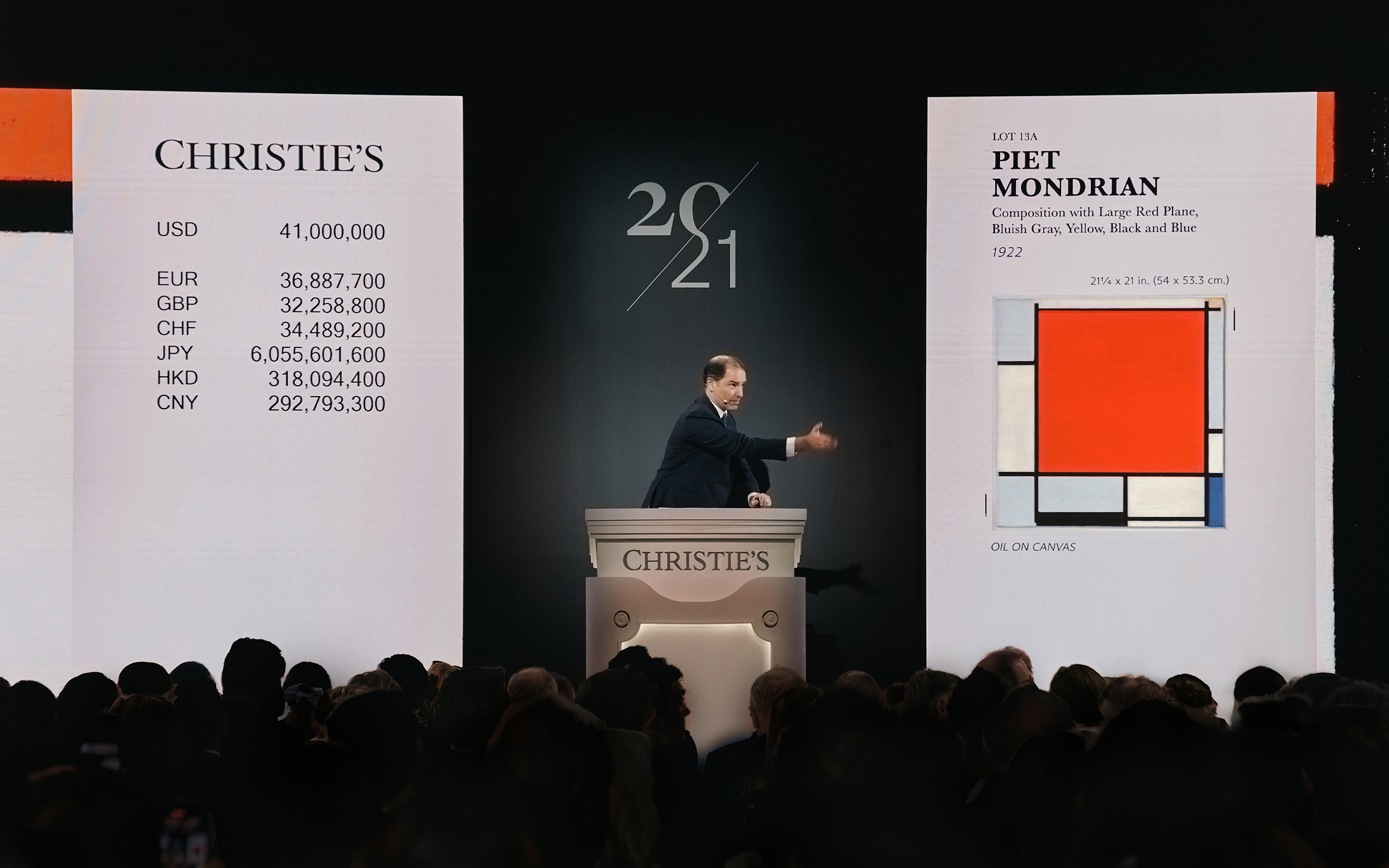
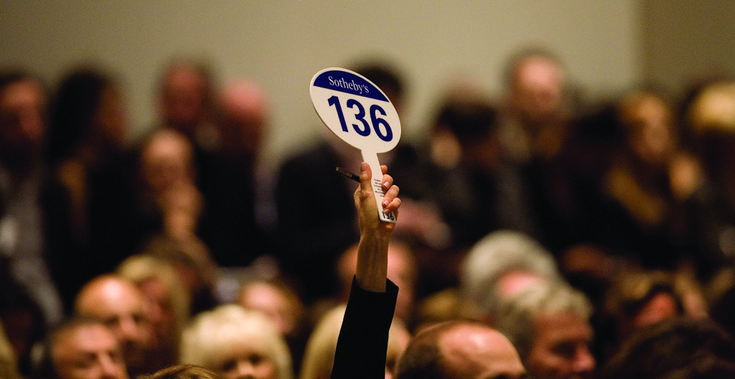
Where value gathers, works are exchanged
The global art market reached $59.6 billion in 2025 (source: Art Basel & UBS, The Art Market Report 2026). While this figure suggests vast scale, value is actually highly concentrated: within a few segments of art history, and, within those segments, among a small number of artists. This concentration is the starting point for the matis investment thesis. This article explains its origins, why it informs our choices, how it guides our exit strategy, and what it does not guarantee.
Four movements, three-quarters of auction value
The matis scope covers four movements: Impressionism, Post-Impressionism, Modern art, and Post-War art, spanning creations from 1870 to 1980. The Art Basel & UBS report groups these into three categories. In 2025, their share of fine art auction value was distributed as follows (source: Art Basel & UBS, The Art Market Report 2026):
- Impressionism and Post-Impressionism: 19%, compared to 14% in 2024, totaling $1.8 billion, following a 47% increase in value;
- Modern art: 24%, totaling $2.4 billion, an increase of 9%;
- Post-War art: 31%, totaling $3.1 billion, the leading segment by value despite a 3% decline.
Together, these segments accounted for 74% of the value of global fine art auctions. If we add contemporary art (14%, or $1.4 billion), all movements from Impressionism to the present day represent 88% of this value; Old Masters in the broad sense account for only 11%, just under $1.2 billion (matis calculation based on Art Basel & UBS, The Art Market Report 2026). The report also notes a structural rebalancing toward established artists: in 2025, the highest prices remained concentrated in the most established market segments, rather than on recent artists.
Disclaimer: past performance is not indicative of future results. Investing in unlisted assets carries a risk of partial or total loss of invested capital.
matis analysis. These four movements share one common trait: their history is written. The artists are identified, their major works are cataloged, and their place in museums has been secured for decades. It is this consensus, rather than seasonal trends, that attracts international demand to these segments. However, distributions vary from year to year: the share of Post-War and contemporary art has been declining for four years, while the share of Impressionism rose sharply in 2025.
Within these segments, a few names drive the value
Concentration does not stop at the segments. It is reflected in prices and in names.
A high-end market that concentrates value, and is growing. More than half (54%) of the value of live auction sales comes from lots sold for over one million dollars. And this segment is not marginal: in 2025, the number of works sold for over one million dollars increased by 15%, and their value by 21%; for works over ten million, the value increased by 30% (source: Art Basel & UBS, The Art Market Report 2026).
A single lot illustrates this: the Portrait of Elisabeth Lederer by Gustav Klimt sold for $236.4 million at Sotheby's New York in November 2025, the second-highest price ever achieved at auction. The Impressionist and Post-Impressionist segment accounted for six of the ten most expensive lots of the year (source: Art Basel & UBS, The Art Market Report 2026).
Hundreds of thousands of artists, a hundred names that matter. Artprice databases cover more than 865,000 artists, and 867,000 works were sold at auction worldwide in 2025 (source: Artprice). To track the heart of the market, however, the Artprice100® index selects only about a hundred: those artists whose auction sales have been both the highest over five years and the most consistent, with at least ten sales per year. And even among these hundred names, value remains concentrated. In the most recent composition of the index, published in April 2026 and established as of January 1, 2025, the top five artists—Pablo Picasso (7.9%), Andy Warhol (5.1%), Claude Monet (4.8%), Jean-Michel Basquiat (4.2%), and René Magritte (3.3%)—account for more than a quarter of the index, the top ten for 37.5%, and the top twenty for more than half (source: Artprice).
These percentages measure each artist's weight in the index, proportional to their auction sales revenue. They do not measure the performance of their works. For these artists, transactions are regular : Picasso was sold at auction 3,729 times in twelve months, making him the most traded artist in the world in 2025 (source: Artprice, The Art Market in 2025).
Disclaimer: past performance is not indicative of future results. Investing in unlisted assets carries a risk of partial or total loss of invested capital.
Why so few artists concentrate so much value
Matis analysis. Five mechanisms explain this concentration, according to our reading of the market. None is sufficient on its own; it is their combination that distinguishes a museum-grade* artist from the rest of the market.
1. A finite supply that is shrinking
For a deceased artist, the body of work is closed: no new works will be added. And a portion of this body of work leaves the market permanently as museums acquire it. In France, public collections are inalienable. The supply available for major works therefore tends to shrink over time.
2. Recognition built over several decades
Exhibitions in major institutions, retrospectives, presence in permanent collections, and a place in art history curricula: the value of these artists rests on a consensus accumulated over time. This consensus is harder to challenge than the enthusiasm for a recent artist.
3. Deep, international demand
These artists are sought after in New York, London, Paris, and Hong Kong, by private collectors and institutions alike. The higher the number of potential buyers, the more likely competition for a work becomes, and the more transparent price formation is.
4. More reliable information
Catalogues raisonnés, authentication committees, and decades of public sales history: for these artists, a work's provenance and authenticity are better documented, and there are more comparable prices available. This reduces some of the uncertainty for the buyer.
5. A snowball effect
Visibility fuels demand: the most exposed and discussed artists are the ones new collectors turn to first, which further strengthens their position. This mechanism works both ways: it can also amplify a lack of interest.
* Blue-chip art refers to high-value works by major artists who have left a profound mark on art history and are recognized by museums, international galleries, and collectors. These works sell at the highest prices at auction, starting from several hundred thousand dollars.
Our thesis: go where value is concentrated
The matis investment thesis stems directly from this observation, based on three choices.
A scope: the four movements where value is concentrated. Since three-quarters of auction value is concentrated in Impressionism, Post-Impressionism, Modern art, and Post-war art, the matis Art team focuses its analysis on these movements, created between 1870 and 1980.
A selection: artists with the deepest demand. Within this scope, matis analyzes 165 artists: those who have evolved our conception of art, who are studied by museums and critics, are regularly present in the collections of the world's greatest museums, and are supported by a significant number of dealers and galleries.
A price range: below the records, where buyers remain numerous. The selected works are valued between €300,000 and €4.5 million. This range is intentionally positioned below the segment of works over ten million dollars, which drives records but attracts a very limited number of buyers. The goal, according to our analysis, is to select works by the most sought-after artists in a price zone where the number of potential buyers remains broader.
Thinking about resale from the moment of acquisition
At matis, divestment is not a question we ask ourselves when it comes time to sell: it structures the selection of the work from the very beginning. Three rules follow from this.
1. An artist must have a market, not just a name
An artist supported by only one dealer represents a market that is too narrow, and therefore too risky. The Art team requires two conditions for depth: multiple market players supporting the artist, and a sufficient volume of works to ensure regular exposure. Two profiles can meet this: a very abundant body of work that fuels an active market, like that of Andy Warhol; or a rare but highly internationally exposed body of work sought after by major collectors, like that of Sophie Taeuber-Arp.
2. Due diligence secures resale as much as purchase
Provenance, authenticity, and condition: every work is verified across these three axes before acquisition, because a future buyer will demand the same. Each artist has their own authentication system, and some committees are better recognized by the market than others: hence the principle of double-checking everything. The cost of any potential restoration is integrated into the financial analysis from the start.
3. The resale network is a selection criterion
A work is only selected if the Art team knows where and to whom it can be presented. Divestment takes place through international galleries specializing in the artist, fairs, exhibitions, or private presentations to collectors specifically seeking that type of work. The choice of partner is based on two criteria: the quality of their collector network and the visibility they offer. Furthermore, each artist has their own market geography: Pierre Soulages sells primarily in Europe, but the presence of his works at MoMA keeps the American market as a viable path.
These rules are intended to prepare for divestment; they do not guarantee it. The timing and price of the sale remain uncertain.
What this thesis does not claim
- Concentration is not a guarantee. A renowned artist may see their market value decline, and a specific work may sell for less than its purchase price. The post-war and contemporary sector has declined for four consecutive years.
- Market depth is not liquidity. Even for the most traded artists, a work cannot be resold on demand, and the timeframe for a sale is not guaranteed.
- Aggregates do not tell the whole story. A rising segment may contain declining artists, and vice versa. Analysis must be conducted on a work-by-work basis.
- Concentrating also means exposing yourself. A selection narrowed down to a few signatures reduces diversification. Since each dedicated company holds only one work, exposure is built work by work.
Conclusion: combining artistic value and financial value
The matis thesis is based on one idea: seeking out works where artistic value and financial value converge.
Artistic value is an artist's place in art history, validated by museums, critics, and time. Financial value is the depth of demand for their works, the transparency of their pricing, and the number of potential buyers. In the art market, the two largely overlap: the artists who have left the greatest mark on history are also, for the most part, those with the deepest markets. It is at this intersection that matis focuses its analysis, preparing for resale from the moment of acquisition.
This financial value remains potential: it is never guaranteed, and a work can also depreciate. The choices described here are a method, not a promise.
Disclaimer: past performance is not indicative of future results. Investing in unlisted assets carries a risk of partial or total loss of the invested capital.
Matis analyzes 165 artists, from Impressionism to contemporary art—creations spanning from 1870 to 1980—and selects works valued between €300,000 and €4.5 million. The Impressionist and Post-Impressionist, Modern, and post-war segments—the core of the matis scope—accounted for 74% of the value of global fine art auction sales in 2025 (source: Art Basel & UBS, The Art Market Report 2026). Matis is a French company regulated by the AMF (PSFP no. FP-2023-19).
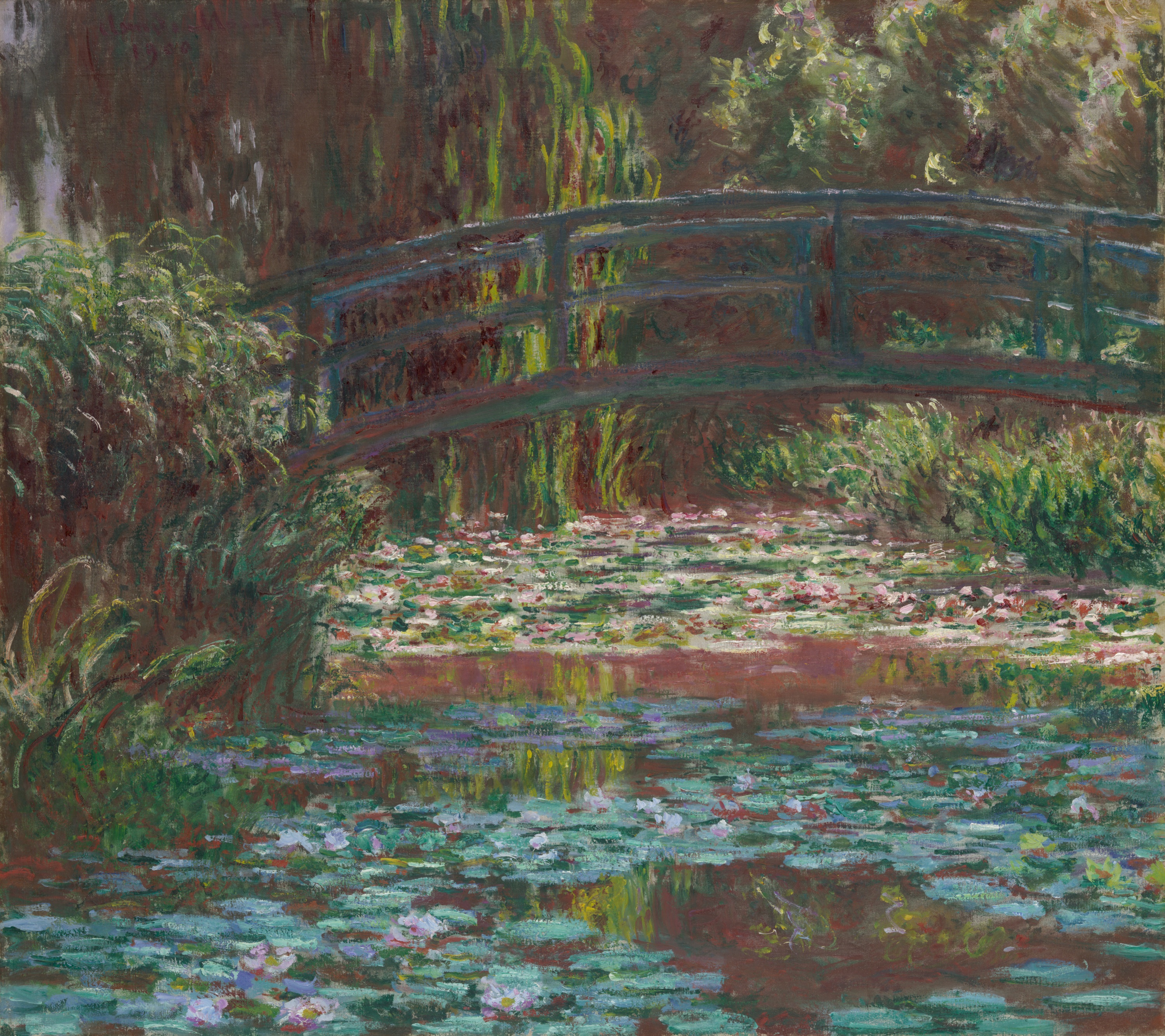
Image credit: Claude Monet, Water Lily Pond, 1900. The Art Institute of Chicago, Mr. and Mrs. Lewis Larned Coburn Memorial Collection (public domain).